





Trails
All trails are open daily from 7 a.m. until sunset. Pets
must be kept on a leash. Bicycles are restricted to paved
areas and bicyclists are required to follow the same rules of
the road as motorists. Hiking is permitted on all trails.
Horses, roller-skates/blades and skateboards are prohibited
in all areas. For your protection and that of our resources,
remain on the designated trails.
Paved Area
Hiking/Bicycling Trail
This three-mile asphalt trail winds up and
down the loess hills that dominate Weston Bend State Park.
The trail crosses a creek twice and intersects with
Harpst
Pass at the yellow bench, and the west ridge section of
Harpst Trail at the white bench. Stenciled on the trail are
mile markers to assist walkers wishing to increase their
distance and time. Hikers may walk in either direction.
Bicyclists must keep to the right. To the right is the trail pictured
in summer and winter.
Mowed Area (hiking only)
Campground Trail is a one-half-mile loop located between the campground and the office. It offers hikers a glimpse of the warehouses at the distillery. This trail also surrounds a favorite bedding spot for some of the wildlife of the park.
Unpaved (dirt) Areas (hiking only)
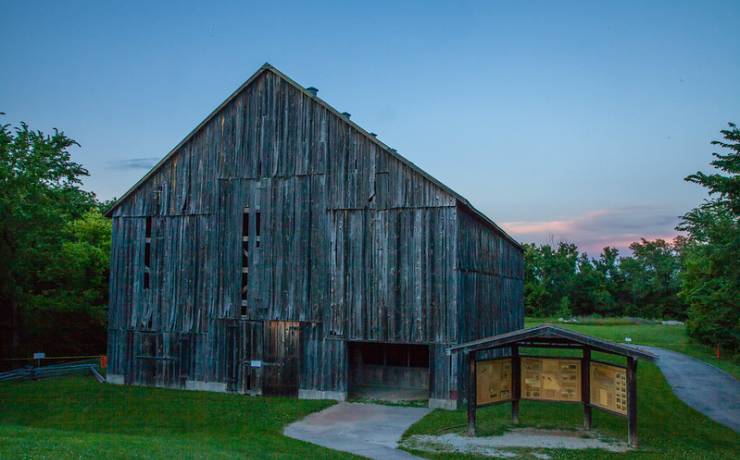
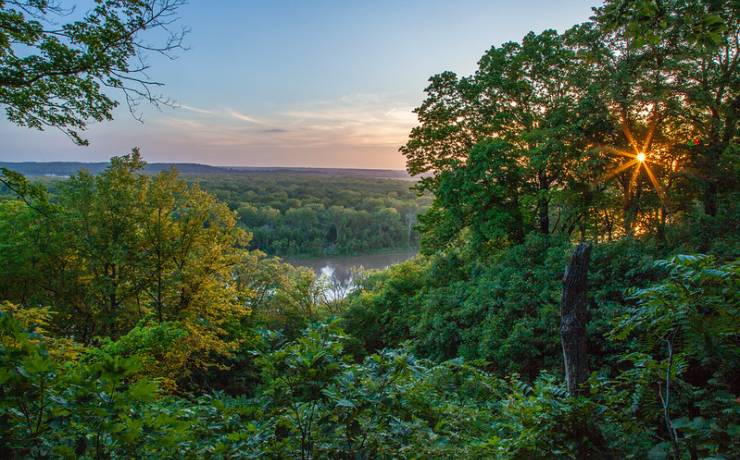
North Ridge Trail is a two-mile trail (one up/one down) that follows the c. 1900 roadbed that once led from the farm (where you park to access the trail) to the barn and eventually Weston. The trail now takes you to the top of the loess bluffs offering a panoramic view of the Weston bend in the Missouri River. The French Canadian, Pensineau, operated his c. 1830-trading house in this area.
Missouri River Trail is a one-half-mile trail that takes hikers directly to the edge of the Missouri River.
Bear Creek Trail is a one-half-mile trail that takes hikers to what was the pre-1858 channel of the Missouri River. Sloughing of the bank changes the view and direction this trail meanders as it follows the creek to the Missouri River.
Those following the Lewis and Clark Trail (July 1804), will have the opportunity to gain first hand knowledge of the "mud, muck, mire and mosquitoes" that the Corps of Discovery experienced as you walk along Bear Creek Trail.
Harpst Trail consists of two distinct routes; Harpst Valley and the West Ridge section.
Harpst Valley is a
one-mile loop that begins on the ridge to the left of the
overlook path. The trail follows along the loess Missouri
River bluffs until it reaches the manmade pass that once
connected the internationally famous Harpst Orchards (c.1900)
to a farm to market road between the bluffs and the Missouri
River. Take the pass to the left (east). At the bottom of the
hill, you will see Harpst Valley to the left (north). The
valley once housed the orchards' large warehouse. Newspaper
articles of the period note that peaches grown here were
imported to English royalty. Follow the valley back to the
overlook parking lot. A yellow bench is available for a place
to rest.
West Ridge is a two and one-half mile loop that continues straight (south) past Harpst Pass and wanders through the forested bluff, paralleling the remnants of an old road that once led to a homestead. Once the hiker begins their descent, they enter the Bee Creek bottoms. In the late 1850s, Potawatomis were encamped here during a forced relocation. Soon you will find yourself at a white bench on the paved trail. Turn left on the paved trail. When you see the yellow bench, follow the path up Harpst Valley to the overlook parking lot.
The Ethics of Good Trail Use
- Carry out what you carry in. If the trail users before you have not done this, you can help by removing their trash as well.
- Keep your group small. Small groups are less likely to harm the environment.
- Stay on the trail. Do not take shortcuts.